Standard DTF film is a practical choice for many garment printing jobs. It supports everyday T-shirts, hoodies, bags, labels, and promotional products. But when the customer wants a more premium finish, the film choice becomes more important.
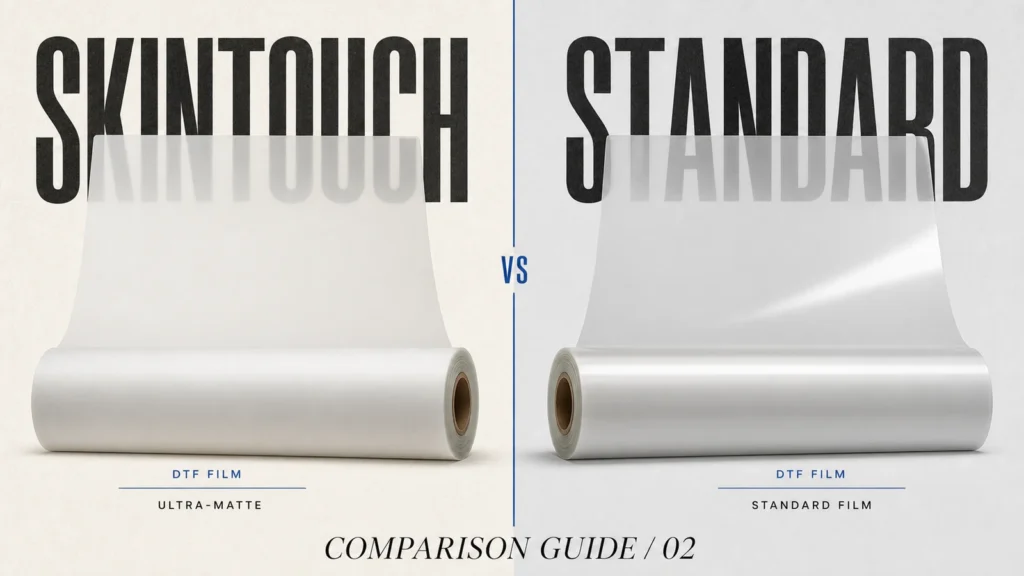
SkinTouch is Jinlong’s product term for the JL-04 Ultra-Matte DTF Transfer Film. It is designed for refined DTF transfer applications where soft touch, low gloss, stable color release, and stronger wash performance matter.
Quick Comparison
| Factor | Standard DTF film | SkinTouch ultra-matte DTF film |
|---|---|---|
| Best use | General DTF production | Premium apparel, gifts, designer products |
| Surface finish | Depends on film type | Ultra-matte, 2-3GU |
| Hand feel | Standard DTF hand feel | Softer, refined skin-touch feel |
| Visual texture | General transfer surface | Silicone-like rich visual effect |
| Wash durability | Standard performance | About 3 times better than standard DTF film |
| Workflow | Regular DTF process | Regular DTF process |
| Peel type | Varies by film | Cold peel |
| Second press | Often recommended for some films | Not recommended for JL-04 |
When Standard DTF Film Is Enough
Standard DTF film is suitable for many common jobs, especially when the customer mainly needs reliable transfer quality and cost control.
It is often enough for basic T-shirt printing, promotional apparel, general custom orders, fast daily production, and designs where surface texture is not the main selling point.
For many print shops, standard film remains the main production material. It is efficient, familiar, and flexible.
When SkinTouch Is the Better Choice
SkinTouch is a better fit when the final product needs to feel more premium. It is designed for customers who notice the difference between a basic transfer and a refined finished surface.
Choose SkinTouch when the order requires ultra-matte appearance, soft-hand print surface, low-gloss fashion look, premium gift finish, designer brand presentation, rich silicone-like color effect, better wash resistance, or higher perceived product value.
This makes SkinTouch useful for higher-margin jobs where finish quality helps justify the product price.
Surface Finish: Low Gloss vs General Gloss
A standard DTF print may look good, but it can sometimes appear too shiny for premium apparel. SkinTouch controls gloss at around 2-3GU, creating a natural ultra-matte finish.
Low gloss is especially helpful for fashion-brand graphics, minimalist logos, high-end custom gifts, dark garments, lifestyle apparel, and designs photographed under strong light.
Hand Feel: Why Touch Changes Product Value
Customers do not only see a garment. They touch it, wear it, wash it, and compare it with other products.
SkinTouch is designed for a refined skin-touch feel. This helps reduce the plastic-like impression that some customers associate with heat transfers.
For apparel brands, hand feel can affect customer satisfaction, repeat purchase potential, product positioning, perceived quality, and brand image.
Wash Durability: Why It Matters
The JL-04 SkinTouch product specification states that its wash resistance is approximately 3 times better than standard DTF film.
This is important for garments that will be worn and washed frequently. Better wash performance helps reduce customer complaints related to cracking, fading, peeling, or surface wear.
For production shops, durability is also a sales argument. A premium film should not only look good on day one. It should hold up after use.
Workflow Difference: No Major Process Change
A key advantage of SkinTouch is that it is workflow friendly. Users do not need to change the regular DTF process.
The recommended SkinTouch workflow includes printing with the regular DTF process, applying TPU hot melt powder, curing at 130 C – 140 C for 2-3 minutes, heat pressing at 160 C for 6-8 seconds, cooling completely, and cold peeling diagonally at a steady speed.
The film upgrade changes the finished texture, not the whole production system.
Choosing Between SkinTouch and Standard DTF Film
Use standard DTF film when the job is price-sensitive, the customer needs basic DTF output, surface finish is not a priority, or the product is for general promotion.
Use SkinTouch when the product is premium apparel, the customer wants soft hand feel, low gloss is important, stronger wash durability is valuable, or the shop wants to offer an upgraded DTF option.
Conclusion
Standard DTF film and SkinTouch DTF film both have a place in production. Standard film is practical for general orders. SkinTouch is designed for premium jobs where the final print needs a softer feel, ultra-matte look, rich color output, and stronger wash performance.
If you want to build a premium DTF product line without changing the regular DTF workflow, JL-04 SkinTouch Ultra-Matte DTF Transfer Film is a strong option to test.
FAQ
Is SkinTouch the same as standard DTF film?
No. SkinTouch is Jinlong’s premium ultra-matte DTF transfer film designed for soft-hand, low-gloss, refined DTF prints.
Is SkinTouch better than standard DTF film?
It depends on the job. SkinTouch is better for premium apparel, gifts, designer products, and applications where matte finish, hand feel, and wash durability matter.
Does SkinTouch require special equipment?
No. SkinTouch is designed for the regular DTF printing workflow, but process settings should still be calibrated before bulk production.
What is the main advantage of SkinTouch?
The main advantage is a premium finished texture: ultra-matte surface, soft hand feel, silicone-like visual effect, and stronger wash resistance.
Should every DTF order use SkinTouch?
No. Standard DTF film is still practical for general production. SkinTouch is best used as a premium option for higher-value products.
Not sure whether to choose standard DTF film or SkinTouch? Contact Jinlong DTF with your printer width, fabric type, product positioning, and target finish. We can recommend a film, powder, and ink combination for your DTF workflow.